
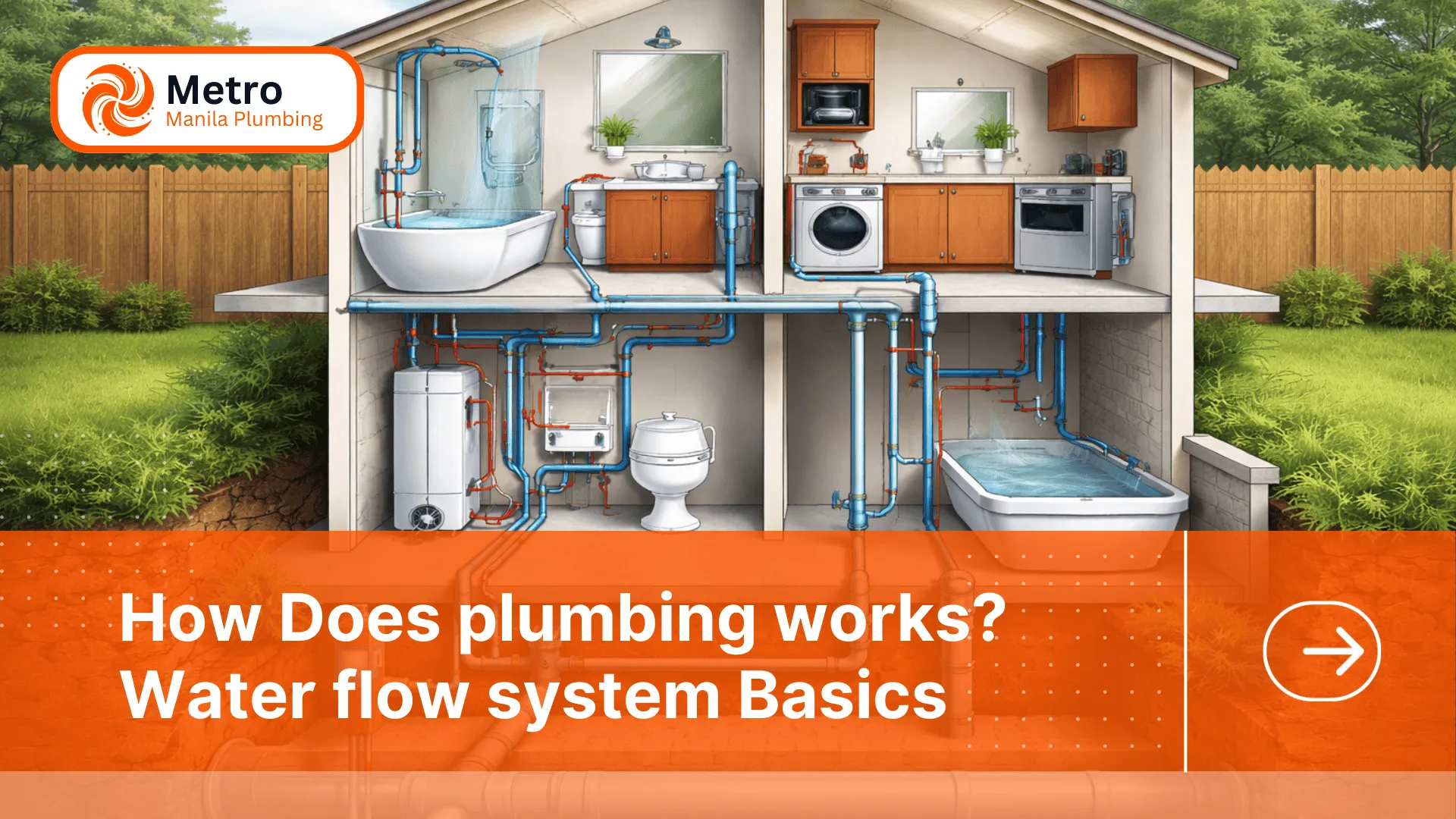
A plumbing system has two connected networks. Potable water flows in under pressure to taps, showers, toilets, and appliances. Wastewater drains out by gravity through drains, traps, and vents to sewer or septic. Homes keep runs short, while larger buildings use pressure zones, risers, isolation valves, and pressure control. Drainage depends on slope, venting, and cleanouts. In Manila, designs also address frost depth, basements, and backwater protection.
What is plumbing work?
Plumbing work includes installing and repairing the system that supplies potable water and removes wastewater. The scope includes supply piping, fixture connections, shutoff valves, pressure control components, water-heater connections, drains, traps, vents, and cleanouts. Code specify pipe sizing, trap seal depth, vent sizing, and cross-connection protection.
How does plumbing work?
Steps
Water enters from a utility main or private pump line.
A meter and main shutoff control entry and allow isolation.
Pressure moves water through cold branches and through a heater for hot branches.
Opening a fixture valve sends water to taps, showers, toilets, and appliances.
Wastewater drops into a drain and passes a trap that blocks sewer gas.
Vent piping balances air pressure so traps keep their seal.
Gravity carries discharge through sloped branch drains into the building drain.
Flow exits to a municipal sewer or a septic tank inlet.
Backflow devices and vacuum breakers stop reverse flow.
Hammer arrestors reduce pressure spikes from fast valve closure.
Plumbing pairs pressure-driven supply with gravity-driven drainage. Supply pressure comes from the utility or pump, so water reaches outlets when a valve opens. Drain piping relies on slope and venting, so waste leaves without siphoning trap water. Backflow protection blocks reverse movement into potable lines, and hammer control reduces pipe bang.
How does plumbing work in houses?
In a house, a short supply “tree” feeds fixtures and a compact drain/vent network carries discharge to sewer or septic. Water enters, passes the main shutoff, then splits into cold branches and into a heater for hot service. Typical homes use a 3/4-inch main feed with 1/2-inch fixture runs, and residential systems often run 40–80 psi with a pressure-reducing valve when street pressure is high. Drains collect discharge into the building drain, while a vent stack stabilizes trap seals. I attach image how plumbing works in homes.
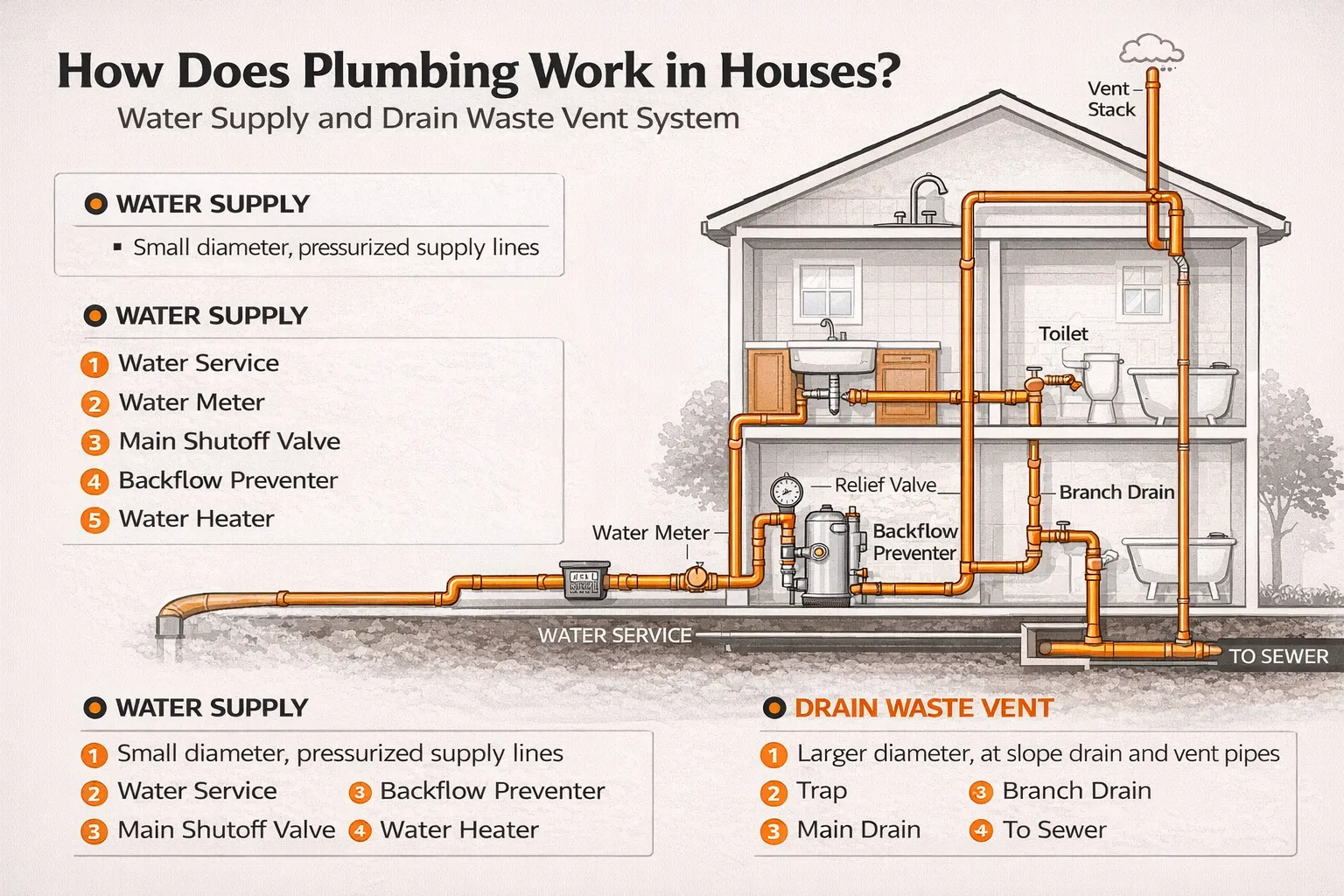
How does water pass through plumbing lines in homes?
Supply water travels from the service line to fixture stops, then through faucet cartridges, mixing valves, or toilet fill valves. After use, wastewater leaves through a trap, then through a trap arm into a branch drain set to the required slope (often 1/4 inch per foot for smaller pipe sizes under many North American code tables). Vent ties near the trap arm keep pressure near neutral so the trap seal stays in place. Discharge then reaches the building drain and exits to sewer or septic.
How does plumbing work in buildings?
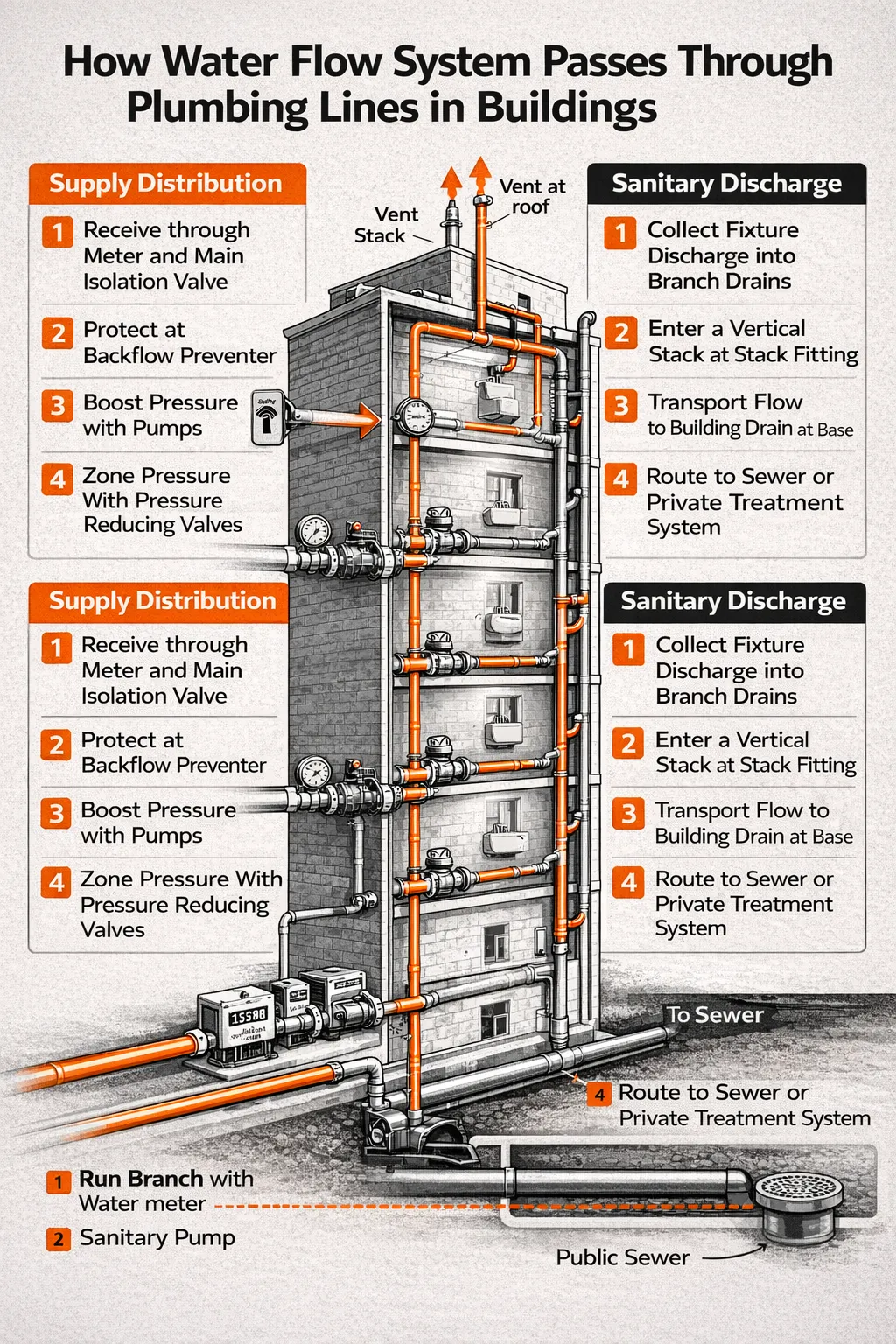
Multi-storey buildings use risers, isolation valves, and pressure zoning to serve many floors without overpressure on lower levels. Static head increases about 0.433 psi per vertical foot, so taller structures use booster sets for upper zones and pressure-reducing valves for lower zones. Hot water service often uses a recirculation loop to reduce wait time at distant fixtures. Guidance for large systems includes ASHRAE Standard 188-2015, which addresses stagnation control and temperature management for Legionella risk reduction.
How does water pass through plumbing lines in buildings?
Water enters a service room, passes meters and backflow assemblies, then moves into risers. Upper floors may receive boosted pressure, while lower floors receive regulated pressure. Hot water leaves the heater plant, feeds a hot riser, then returns through a recirculation line to maintain loop temperature. Floor branches feed fixture groups, with check valves and balancing valves controlling direction and return rates. Sanitary discharge drops through stacks to a building drain, with separate routing for kitchen grease control when required. I attach water flow system visualization.
How does drain plumbing work?
Drainage uses gravity, slope, and venting. Each fixture drains through a trap that blocks sewer gas, then into branch piping set to the correct fall so solids move without settling. Vents prevent siphon and backpressure, protecting trap seals and reducing gurgling. Cleanouts provide access for inspection and clearing at direction changes and at code intervals.
Two common design points apply: pipe placement and burial depth address frost and basement layouts, and many basements include floor drains, sump pits, and—where surcharge is possible—a backwater valve to prevent reverse flow during storms. Larger buildings follow the same drainage rules, then add larger stacks, grease interceptors for food service, and dedicated mechanical-room drainage.
How do you maintain your plumbing system?
A plumbing system stays reliable with routine checks. EPA WaterSense (launched in 2006) set fixture targets such as 1.28 gallons per flush for labeled toilets; comparing expected vs actual use can reveal silent leaks.
Test the main shutoff for full travel and a tight seat.
Cycle fixture stop valves and return them to the open position.
Check exposed joints for staining, dripping, or corrosion.
Clean faucet aerators and appliance inlet screens.
Check toilets for slow fill, running, or overflow-tube dribble.
Add water to seldom-used floor drains to maintain trap seals.
Run rarely used fixtures weekly to reduce stagnation.
Record monthly meter readings and watch for sudden jumps.
Service pressure control and expansion components per manufacturer intervals.
Where required, keep backflow test records current.
Comments (0)
Comments are disabled.