
Plumbing is a building network that brings water to points of use, moves used water out, and keeps fixtures serviceable through proven materials and code driven install practice.
What Is Plumbing?
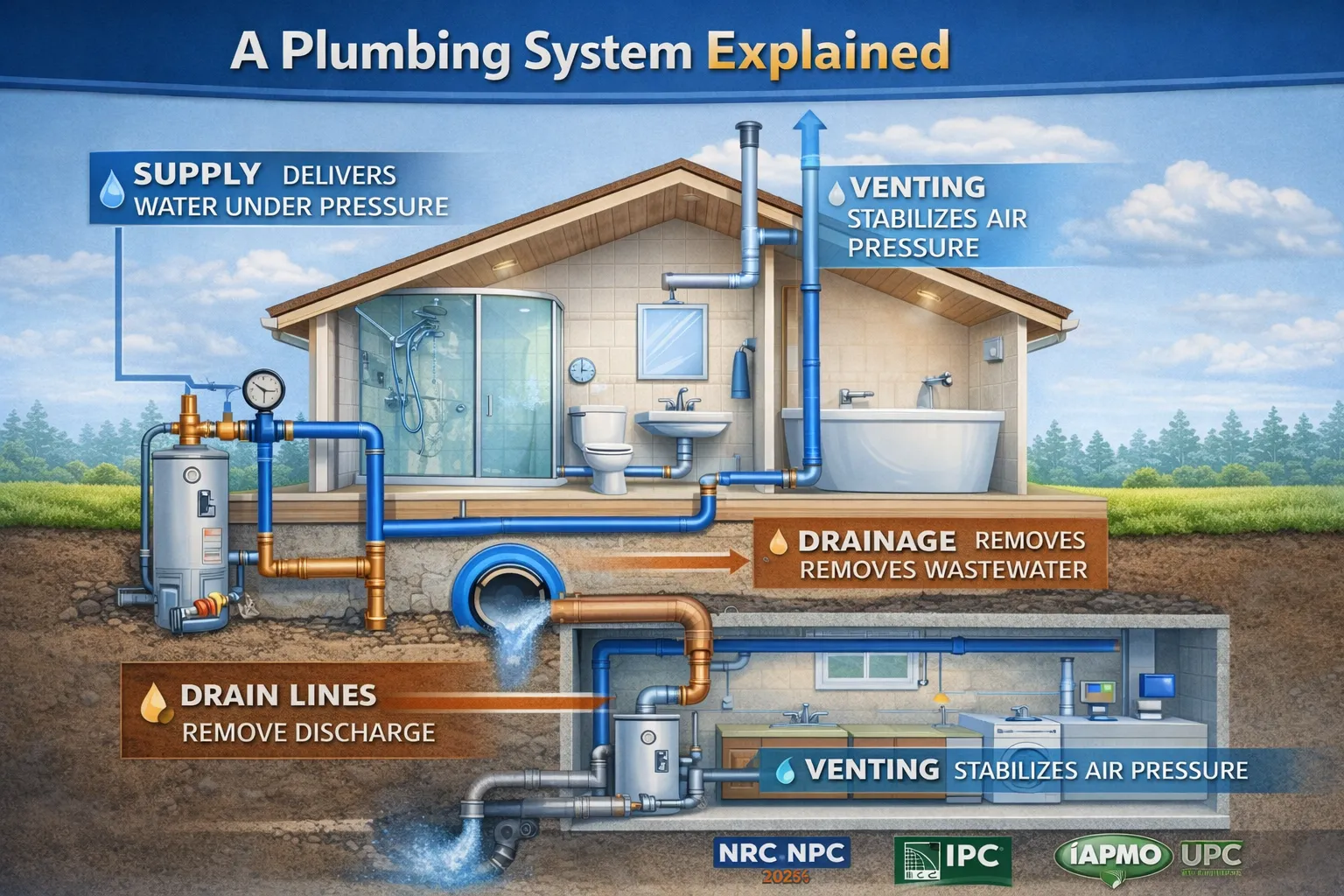
Plumbing is the set of supply lines, drain lines, and vent paths that work together so water arrives clean and wastewater exits without health risk. That “what is plumbing system” phrasing usually points to the three-part relationship: supply pressure feeds fixtures, drainage carries discharge, and venting stabilizes air pressure so traps hold their seal, a concept covered in major code families like NRC NPC 2020, ICC IPC, and IAPMO UPC.
What Is Underground Plumbing?
Underground plumbing covers the below grade portion of a property’s water and drainage run, such as service pipe to the building and the building sewer that exits to the municipal main or septic. NPC 2020 style guidance puts focus on soil rated pipe, correct bedding support, corrosion resistant joins, and cleanout access, since once the trench closes, repairs turn into “dig first, ask questions later.”
What Is Commercial Plumbing?
Commercial plumbing addresses public and business occupancy where fixture volume, peak demand, and compliance checks rise fast. Standards that speak directly to backflow protection, like CSA B64 Series:21 from CSA Group, matter here because cross-connection risk increases in sites with mop sinks, hose bibbs, dish areas, and equipment tie-ins; that pushes common add-ons such as backflow assemblies, recirculation loops, booster arrangements, floor drain systems, and grease interceptors where local rules call for them.
What Is Residential Plumbing?
Residential plumbing focuses on homes, where the priority stays on stable water delivery, quiet operation, and reliable drainage for kitchens, baths, and laundry. Code frameworks like NPC 2020 shape how installers size runs, protect potable water, and vent fixture drains, while practical hardware like shutoff valves and pressure reducing valves helps keep day-to-day use simple when municipal pressure runs high.
How The Plumbing System Works?
A plumbing layout uses pressure to move clean water through supply pipe, then relies on gravity to carry wastewater through drain pipe, while vent lines keep trap seals intact. Model codes such as ICC IPC and IAPMO UPC specify trap seal depth ranges of 51 mm to 102 mm, because that water seal blocks sewer gas at the fixture point. Gravity does most of the work here, which is why plumbers respect it like an old foreman who never takes a day off.
Water enters from the service, passes the meter, reaches the main shutoff, then splits to branches.
Valves control flow, then fixture stops isolate each outlet for repair.
A water heater feeds the hot side, then hot lines distribute to points of use.
Discharge drops into a trap, then runs through a waste arm into the drainage stack or branch.
Vent paths equalize air pressure, which helps traps keep their seal during flow.
For house:
Use a main shutoff plus fixture stops for quick isolation.
Keep traps at each fixture so gas stays out of living space.
For construction:
Set rough-in heights, place sleeves, protect stub-outs.
Test supply and drain before close-in.
For building:
Size risers and branches to match demand.
Add backflow control where cross-connection risk exists.
What Are The Tools Use In Plumbing?
Trade tools cover cutting, joining, fastening, and verification so work meets code and holds under pressure. Guides like the ASPE Plumbing Engineering Design Handbook Vol 1 describe the system checks and measurements that support safe results.
Cutting: tubing cutter, hacksaw, PVC shear
Edge prep: reamer, deburr tool, emery cloth
Metal joins: torch, solder, flux, striker
Plastic joins: primer, solvent cement, applicator
PEX joins: crimp tool, clamp tool, expansion tool
Turning: pipe wrench, adjustable wrench, basin wrench
Threads: pipe threader, dies, cutting oil
Testing: pressure gauge, test pump, manometer
Locating issues: inspection camera, moisture meter, acoustic locator
What Are The Types Of Plumbing?
Most building work falls into six system categories, each with its own layout rules and material choices. “PEX plumbing” usually refers to domestic water distribution that uses cross-linked polyethylene tubing as an alternative to copper or CPVC, with code scope described in model references such as ICC IPC.
Potable cold water distribution to fixtures
Hot water distribution from heater, with recirc where used
Sanitary drainage to sewer or septic
Vent system that protects trap seals
Storm drainage from roofs and site inlets
Fuel gas or hydronic piping where permitted by local code
Common material families:
Copper, cast iron, PVC, ABS, PEX, CPVC, HDPE, stainless steel
What Is The Importance Of Plumbing?
Plumbing matters because it protects health, prevents property loss, and keeps daily water use dependable through code controlled design and install practice. Trap seals form a measurable barrier at fixtures, and backflow control standards like CSA B64 Series:21 focus on stopping contaminated water from returning to potable supply.
Key outcomes:
Safe water at taps
Reduced contamination risk through backflow controls
Controlled wastewater removal that protects structures
Support for food service needs where grease control applies
Better comfort through stable pressure and temperature
Fewer odors through protected trap seals
Easier maintenance through valves and access points
What Is The Difference Between Plumbing And Piping?
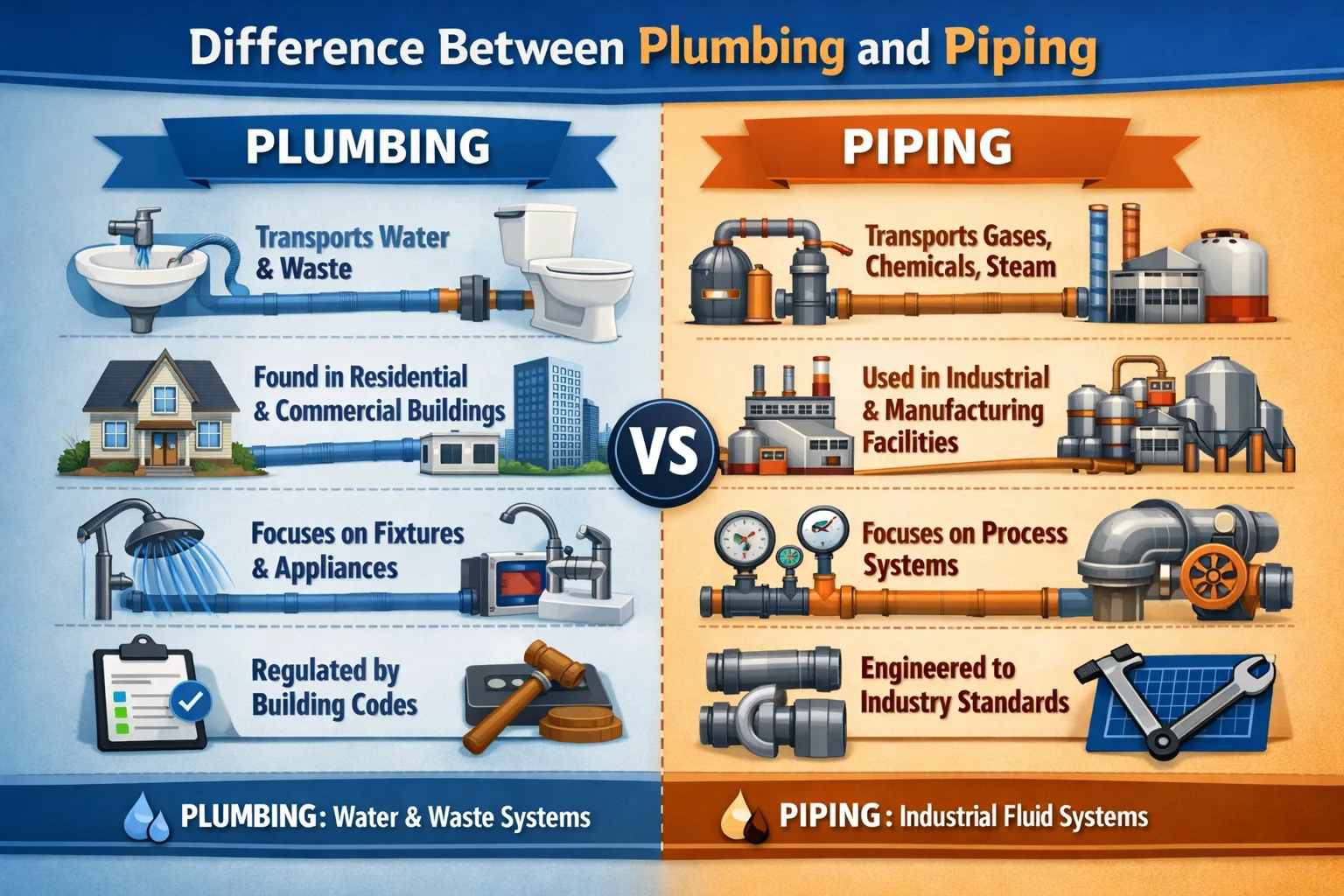
The Difference between plumbing and piping is plumbing handles water supply and waste inside homes and commercial buildings, while piping carries process fluids like gases, chemicals, and steam in industrial plants.
What Are The Most Common Problems Of Plumbing?
Common issues fall into a few repeat categories: blockage, seepage at joints, corrosion, pressure shock, trap seal loss, and worn fixture parts. IPC Chapter 10 style guidance emphasizes trap seal protection, since seal loss in low-use drains often leads to odor complaints.
Typical trouble spots:
Restriction in traps, branches, or building drains
Seepage at compression joints or supply stops
Mineral scale in aerators, valves, or heater tanks
Water hammer from fast valve closure without arrestors
Trap seal loss from evaporation in floor drains
Toilet fill valve wear that causes continuous refill
Comments (0)
Comments are disabled.